World Wetlands Day
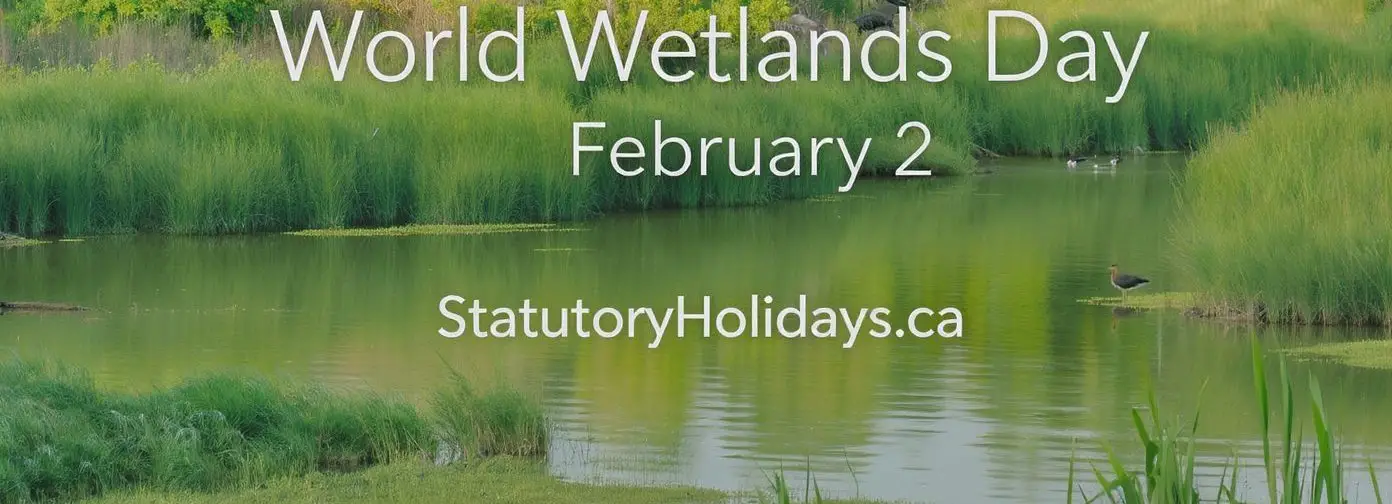
World Wetlands Day is observed annually on February 2 as a global environmental awareness observance to highlight the importance of wetlands — vital ecosystems that support biodiversity, clean water, flood protection and climate resilience. The day marks the anniversary of the signing of the Ramsar Convention on Wetlands in 1971, an international treaty focused on conserving wetlands of global importance.
For a complete list of public holidays, observances and awareness days in Canada, including international environmental awareness dates like World Wetlands Day, visit StatutoryHolidays.ca — a comprehensive resource on national and global observances.
World Wetlands Day commemorates the adoption of the Convention on Wetlands of International Importance — also known as the Ramsar Convention — which was signed on 2 February 1971 in Ramsar, Iran. The goal of the convention is to promote the conservation and “wise use” of all wetlands through local, national and international cooperation.
The first World Wetlands Day was celebrated in 1997. Since then, the day has served as a platform for governments, environmental organizations and communities worldwide to highlight the ecological, social and economic value of wetlands and advocate for their protection and restoration.
What Are Wetlands?
Wetlands are unique ecosystems where water — either permanently or seasonally — plays a dominant role in shaping the landscape and its biological communities. These areas include marshes, swamps, peatlands, floodplains, mangroves and estuaries, and even human-made wetlands such as rice paddies and reservoirs.
Despite covering only about 6% of the Earth’s land surface, wetlands support approximately 40% of all plant and animal species and provide essential ecosystem services that sustain human life and environmental health.
Importance of Wetlands
Wetlands deliver a wide array of environmental, economic and societal benefits:
- Biodiversity Hotspots: Wetlands are home to diverse plant and animal species, many of which are rare, threatened or endemic.
- Clean Water: Acting as natural water filters, wetlands trap sediments and remove pollutants, helping to purify freshwater supplies.
- Flood and Storm Protection: By absorbing excess water during heavy rains and high tides, wetlands help reduce the severity of floods.
- Climate Regulation: Wetlands store significant amounts of carbon, helping to mitigate climate change.
- Livelihoods: Millions of people depend on wetlands for fishing, agriculture, tourism and other economic activities.
Because of their importance, protecting wetlands is essential for sustainable development and conservation efforts around the world.
Threats to Wetlands
Despite their ecological value, wetlands have been under threat for decades. Human activities have caused extensive wetland degradation and loss:
- Conversion to agriculture and urban development
- Pollution from industrial and agricultural runoff
- Climate change impacts such as rising sea levels
- Drainage and infrastructure projects
According to global data, wetlands have been disappearing at rates three times faster than forests, making their protection urgent and critical to ecological and human well-being.
World Wetlands Day Themes
Each year, World Wetlands Day adopts a theme to focus global attention on specific aspects of wetland values, functions and conservation. Past themes have addressed biodiversity, human wellbeing, climate solutions and most recently, “Protecting Wetlands for Our Common Future.” These themes help guide advocacy, education and events worldwide and encourage people to engage meaningfully in wetland stewardship.
Global Observances and Celebrations
World Wetlands Day is observed internationally by diverse groups and organizations. Activities typically include:
Educational Programs
Schools, universities and environmental organizations host workshops, lectures and exhibitions to teach students and the public about wetland ecosystems and conservation strategies.
Community Action and Nature Activities
Local groups organize wetland clean-ups, restoration projects and guided nature walks to connect people with these vital ecosystems.
Policy and Advocacy Events
Governments and NGOs use this day to announce new policies, protected area designations and conservation funding efforts aimed at safeguarding wetlands.
Digital Campaigns
Social media initiatives using hashtags like #WorldWetlandsDay help spread global awareness and share stories, photos, and conservation tips.
Wetlands and Sustainable Development
Wetlands contribute directly to several United Nations Sustainable Development Goals (SDGs), including clean water and sanitation, climate action, sustainable cities and communities, and life on land and below water. By integrating wetland conservation into planning and policy frameworks, nations can promote sustainable development that strengthens ecosystems and benefits communities.
How You Can Help Protect Wetlands
Individuals can take positive steps to support wetland conservation:
- Reduce pollution by minimizing chemical use at home and in gardens
- Support local and global wetland conservation initiatives
- Participate in clean-up and restoration activities
- Learn and share information about wetlands in your community
Every action contributes to healthier ecosystems and a more sustainable future for people and nature.
Conclusion
World Wetlands Day on February 2 serves as a powerful reminder that wetlands are indispensable ecosystems that sustain life, protect communities, and contribute to climate resilience. By recognizing their value and taking action to protect them, we strengthen global efforts toward biodiversity conservation, water security and sustainable development.
To explore important dates like World Wetlands Day, environmental awareness observances, and other global and national observances, visit StatutoryHolidays.ca — your resource for public and special days recognized across Canada and around the world.